
The Devastating Effects of Global Warming
- Project Bluesky
- Aug 21, 2021
- 4 min read

It is estimated that one-third of corals, freshwater mollusks, sharks, and rays, one-fourth of all mammals, one-fifth of all reptiles, and one-sixth of all birds are heading towards extinction"-Sixth extinction
The previous 5 extinctions were brought about by meteorites and volcanic eruptions, but the 6th extinction which we are currently threatened by is being largely accelerated by human activities. This time, entire ecosystems are on the verge of collapse, presenting us with a bleak, horrifying vision of the future generations if we don’t take action now. The entire world, each and every organism is critically threatened by the adverse effects of global warming.

Effects of climate change:
The most profound and tangible effect of global warming is the rise in temperature. On paper, a mere increase in 2 degrees may seem insignificant, however, if such an event does occur it will cause irrevocable changes, the demise and mass extinction of millions of species around the globe.
Effect on Humans ;
The earth is warmer than ever; in the last 40 years, the global annual temperature has risen by 0.18 Celsius per decade. The 5 warmest years recorded have all occurred since 2015. Recently temperatures in Antarctica peaked at an all-time high (18.3c- confirmed by UN). Canada confirmed its highest temperature recorded (49.6C) as a vicious heatwave that claimed dozens of lives across the country and the USA.
Climate change is responsible for floods, droughts, heat waves, and tsunamis. A warmer temperature also harbors and leads to the rise of more pests, therefore promoting more diseases. (Mosquito-borne dengue fever has increased 30-fold in the past 50 years.)

Effect on Animals:
Climate change poses a huge threat to global biodiversity. The major impact of global warming on animals is the destruction of their natural habitat. These are places where animals have adapted for millions of years. However, as a result of climate change, their ability to fulfill the species’ needs has diminished. These affected animals could move into new spaces and thrive, but the growing human population means the land area suitable for such animals has been fragmented and is already bestrewed with residential and industrial growth. Intolerance to high temperatures may also be a key factor in increasing animal extinction. An increase in temperature also leads to variation in precipitation patterns and this acts as a catalyst for animal extinction. Global Warming has also led to the melting of ice caps and rise in sea levels which plays a role in eliminating coastal habitats. The white-horned rhino is one species that has gone extinct in 2021 due to climate change. Other animals gone extinct due to climate change include the Adelie Penguin, the Golden Toad, and the North Atlantic Cod. By 2100, an estimated 50% of species could go extinct according to earthday.org, which include the Polar Bear, Koala Bears, Sharks, and tigers. The Emperor penguin, the largest of all penguins is another species that might go extinct in the next 50 years due to excessive climate change, causing the melting of ice caps in the Antarctic.

Effect on Oceans:
Many important characteristics of oceans have changed over time as a result of climate change. When greenhouse gases trap increasing energy from the Sun, oceans absorb more heat. This results in a rise in sea level and increases the sea surface temperatures. This increase in sea temperature can lead to various climatic alterations throughout the world. Warmer water accelerates the development of storms in tropical regions, which causes damage to life and property. The concentration of dissolved carbon dioxide in oceans has greatly increased which has made oceans more acidic and is a huge threat to marine life. Fish migration is another big problem, which is affecting fisheries throughout the world. Global Warming has also led to a decrease in the number of freely available natural resources. Global Warming has caused the melting of countless glaciers and ice caps. This has been instrumental in the rise of sea levels.
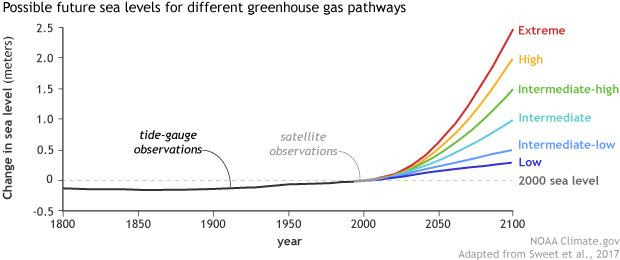
According to climate.gov, the global mean sea level has risen about 8–9 inches (21–24 centimeters) since 1880, with about a third of that coming in just the last two and a half decades. It also says that the sea level will rise at least 12 inches above the 2000 level by the end of the century.
Cities like Bruges, Panama City, Chennai, Mumbai, London, and many more could be completely submerged by 2050 with the current rise in sea levels.

Effect on Economy:
Global Warming is capable of causing long-lasting effects on the economy of various countries. The rise in sea levels, floods, and wildfires caused by global warming, cause immense damage to property and infrastructure. Increasing droughts and other climate-related disasters are expected to increase the number of “climate refugees”, mass movement of people can lead to civil unrest and can have many unintended consequences. Coping costs with disasters caused due to global warming and climate change can really affect the economy as well. Climate change can also disrupt the daily life of people, including loss of work and school days, and harm professions like trade, agriculture, etc. This reduces productivity.


Comments